Robot-Based Field Phenotyping at NMBU Ås as Part of DLT-Farming Project
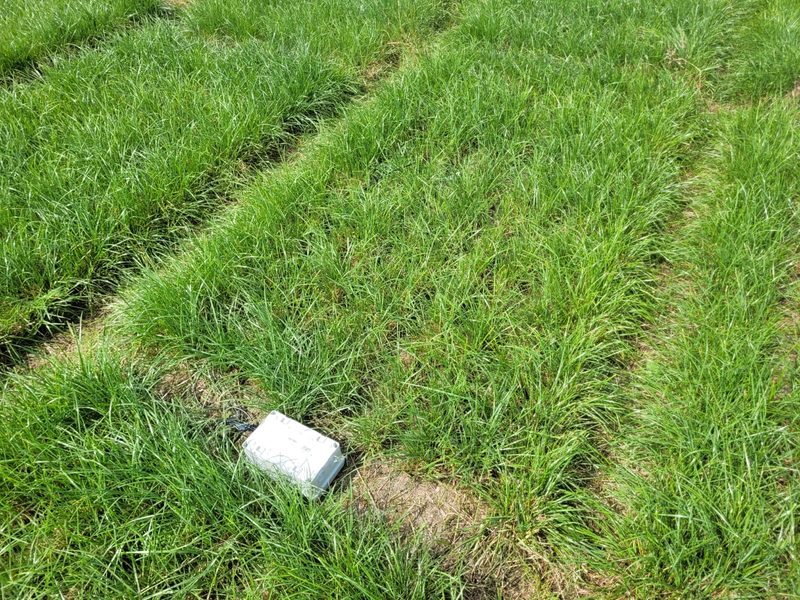
Autonomous robot collecting image and spectral data across forage grass field trial plots at NMBU Ås.
Our phenomics research leverages high-throughput phenotyping platforms, including drone-based and robot-based imaging with RGB, multispectral, and LiDAR sensors. We use NDVI, 3D point clouds, and spectral data to quantify plant traits such as dry matter yield, forage quality, canopy cover, and stress responses across field trials at NMBU Ås and Graminor Hamar.
Traditional phenotyping methods, manual measurements, visual scoring, and destructive sampling, are labour-intensive and limit the number of genotypes and environments that breeders can evaluate. Our remote sensing approach captures tens of thousands of data points per flight, enabling non-destructive, repeatable, and scalable trait assessment throughout the growing season.
Key capabilities include generating ultra-high-resolution orthomosaics and digital surface models from drone imagery, extracting vegetation indices (NDVI, NDRE, GNDVI) that correlate with chlorophyll content and biomass, and building 3D point clouds from LiDAR that precisely measure canopy height and volume. These data streams are integrated with ground-truth measurements to calibrate predictive models for dry matter yield and crude protein content, providing breeders and farmers with actionable insights in near real time.